
Minebreak / Greed. Probability. One more tile.
One more tile could
change everything.
Minebreak is a push-your-luck roguelite about greed, probability, and knowing when to Cash Out. Reveal diamonds, dodge bombs, and build absurd combinations for massive payouts.
01 / The next tile
How greedy
are you?
Reveal diamonds, grow your pot, and cash out before a bomb ruins your payday. Every successful reveal makes the next one harder to resist.
You could leave with a fortune.
Or click one more tile.
In Minebreak, a growing pot changes the way you look at the board. The next hidden tile might add another diamond, but a bomb can end your payday. Cashing out is a decision you make throughout the run: take what you have earned, or put it on the line for a bigger reward.
02 / Your toolkit
Bring more
than luck.
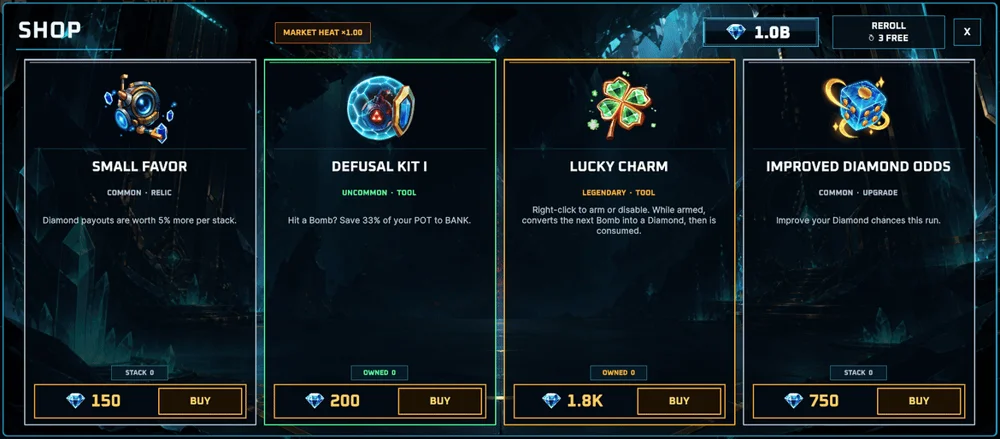
Fill your toolkit with scanners, bomb-defying gadgets, and relics that make every diamond worth more. Buy yourself some breathing room or double down on a dangerously good build.
Minebreak gives you more to consider than the next reveal. The shop lets you shape a build around the opportunities in front of you. A protective tool can give you breathing room, while a relic can make successful reveals more rewarding. The choices you make between boards influence what you are willing to risk on the next one.
Look for combinations that work together. Tools can help you out of trouble; relics can strengthen the rewards you are chasing. A tempting purchase might support your current approach or send the run in a completely different direction. Building that toolkit is part of deciding just how greedy you can afford to be.

Buy breathing room.
Tools for when luck runs thin.

Lean into danger.
Push your build with Edges.

Get a little greedy.
Chase an outrageous payout.
03 / Shape your Minebreak build
Stack the odds.
Push your limits.
Mix Protocols, Edges, and items to take your run in a new direction. Chase bigger payouts, turn danger into opportunity, and discover combinations that make cashing out feel almost unreasonable.
Protocols shape your approach, while Edges push your build further. In Minebreak, choosing between chain reactions, a more valuable but dangerous tile, and tools recovered from bomb wreckage creates different reasons to keep playing. Explore the three examples below, then imagine how your tools and relics could support each choice.
Protocols activate from Depth 4. You choose one permanent operating rule for the run, with no rerolls, so take a moment to compare the offered choices. Think about the tools and relics you already have and the kind of decisions you enjoy making. Each of these examples gives the next reveal a different meaning.

Protocol / Chain reactions
Crystal Cascade
Trigger free adjacent crystal chain reactions. One diamond could be the start of something much bigger.
How the chain reaction works
Crystal Cascade gives diamonds a 20% chance to create another diamond nearby, and those cascades can keep spreading. It is a Minebreak Protocol built around positioning: the location of a reveal matters alongside the value of the diamond itself. A single successful reveal can set off a sequence that reaches beyond the tile you chose.
That gives you something different to look for as the board opens up. Follow where the diamonds appear, watch the chain develop, and consider what the growing pot is worth to you. A cascade makes the reward more exciting, but the decision to cash out still belongs to you.
Choose this approach if you enjoy seeing one event create another. Relics that make diamonds more valuable offer an appealing direction to explore alongside it. The question is how much of that growing payout you want to put at risk before walking away.

Protocol / Greed
Crystal Overcharge
Let one tile become richer and more dangerous. How far will you push it?
What makes the charged tile tempting
Crystal Overcharge concentrates the temptation into one tile. That tile starts at a 2× payout, and other diamonds charge it higher while also making it more dangerous. This Minebreak Protocol asks you to weigh a reward that keeps improving against a risk that is rising with it.
The changing tile gives each successful reveal another consequence to consider. You are growing your pot while making a particular opportunity harder to ignore. A bigger number can be tempting, especially when your build already rewards diamond reveals, but it does not remove the danger attached to the choice.
Choose this approach if you like deciding when a tempting reward is worth pursuing. Watch how the charged tile changes as the board develops, and keep the value you could cash out in mind. There is a difference between building a larger opportunity and deciding that now is the moment to take it.

Protocol / Resource management
Salvage Protocol
Turn bomb wreckage into tools. Find opportunity in a run that went wrong.
How salvage changes your resources
With Salvage Protocol, your first bomb in each paid attempt creates a random tool. You need an empty inventory slot to receive it; with no space available, that tool is lost. This Minebreak Protocol makes inventory management part of how you prepare for a reveal.
Unlike a diamond chain or a charged payout, salvage directs your attention toward what you can carry. The random tool creates a new possibility to assess, rather than a guaranteed answer to the next board. Look at what it does and how it fits the tools and relics you already have.
Choose this approach if you enjoy adapting to the resources a run gives you. Consider your inventory before you continue, then reassess your options when a tool arrives. Turning bomb wreckage into a resource gives you another decision to make, while leaving the tension between revealing and cashing out at the heart of the game.
04 / Go deeper
How deep
will you go?
Conquer 12 depths of expanding boards and escalating rewards. Take your favourite combination deeper, chase an outrageous payout, and find out when enough is finally enough.
Minebreak’s deeper boards give you more room to test the combination you have assembled. Bigger rewards make another reveal tempting, but a strong build still leaves you with decisions to make. Keep weighing the payout you could secure against the opportunity in the next tile. For a more dangerous challenge, explore the six Fractures.
Depths to conquer
Make every run your own
Plenty to get greedy with.
One more tile. One more chance.
Watch the official trailer.
Before your first reveal
Minebreak questions,
answered.
What kind of game is Minebreak?
Minebreak is a push-your-luck roguelite built around greed, probability, and cashing out. You reveal tiles to find diamonds, grow your pot, and try to avoid bombs. Tools, relics, Protocols, and Edges let you shape a run through combinations that change how you approach risk and reward.
What does cashing out mean?
Cashing out is choosing to take your pot before another reveal puts it at risk. Each diamond gives you a reason to continue, while the possibility of a bomb gives you a reason to stop. The challenge is deciding when the reward already in front of you is enough.
How do builds change a run?
Mix tools and relics with Protocols and Edges to develop your approach. You might favour protection, chase higher diamond payouts, or look for ways to turn danger into opportunity. The interesting part is finding choices that complement one another as you work through the boards.
How much is there to explore?
Minebreak has 12 depths to conquer, with expanding boards and escalating rewards. The game includes 18 Tools, 28 Relics, six Protocols, 16 Edges, and six Fractures for more dangerous runs. There are also 25 achievements to chase as you explore different combinations and push your limits.
Where can I wishlist Minebreak?
Open Minebreak on Steam using any Wishlist on Steam button on this page. Once the store page is publicly available, sign in to Steam and select Add to your wishlist.
New to wishlisting? Steam’s official wishlist guide explains how to add a game and manage your list.
Where can I watch the trailer?
Watch the official Minebreak trailer in the trailer section above, on the dedicated Minebreak trailer page, or watch it on YouTube. See the board, builds, and cash-out decisions in action.
Know when to walk away.
Surely one more tile
won’t hurt.
Your next dangerously good build is waiting.