
Advice about things you should never do in Stardew Valley needs context. This is the opinionated companion to my video, with the costs and exceptions explained. I would avoid spending early resources on features that do not serve my current goals, but children, sheep, a Slime Hutch, or an early kitchen can all be good choices for the right player. Here are the ten arguments, their important exceptions, and one rule that overrides the rest: enjoy your own farm.
Watch the companion video on YouTube, or jump to a tip below. The written advice reflects Stardew Valley 1.6; later sections include progression spoilers.
Things to never do in Stardew Valley: contentsOpen contents
1. Don’t have children just for a reward
Children are a family and roleplaying choice. They grow from babies into toddlers, but they do not become farm workers or produce income. If you are upgrading the house purely for efficiency, that is worth knowing before investing in the nursery.
Personally, I prefer spending early resources on systems I use every day. But a family save is a completely valid reason to choose differently. Put hats on your children, enjoy the home you built, and do not judge that choice by how much gold it earns. The real mistake is expecting a mechanical reward the game never promised.
2. Don’t choose the cave without comparing both options
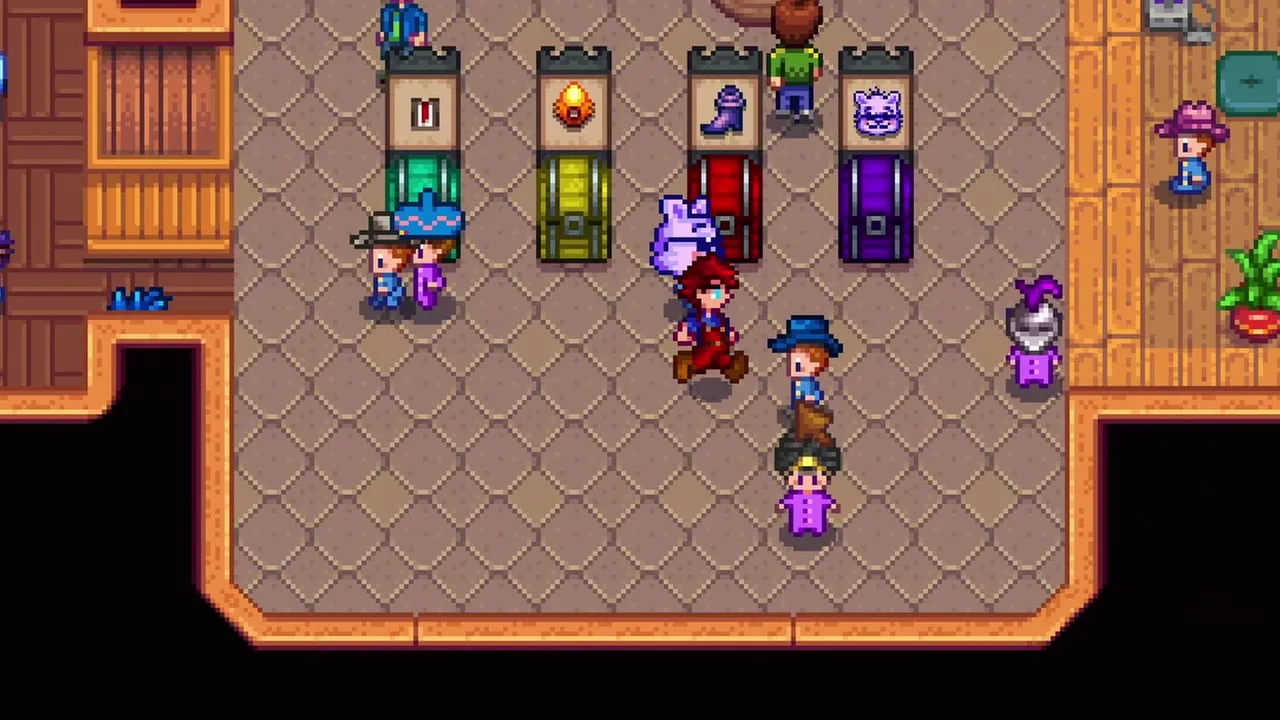
I prefer the fruit bat cave when I want occasional fruit without a strict collection routine. It can help with some bundle items, and Botanist can improve the quality of its forage. However, fruit accumulation slows as the cave fills, so it is not unlimited storage.
The mushroom cave gives a predictable set of mushroom boxes and a free Dehydrator in 1.6. The boxes do not keep stacking new harvests while full. Mushroom Logs offer another source later, but that does not make the cave useless. Choose based on the resources and routine you want; neither option ruins a save.
3. Don’t keep an enchantment that doesn’t suit you
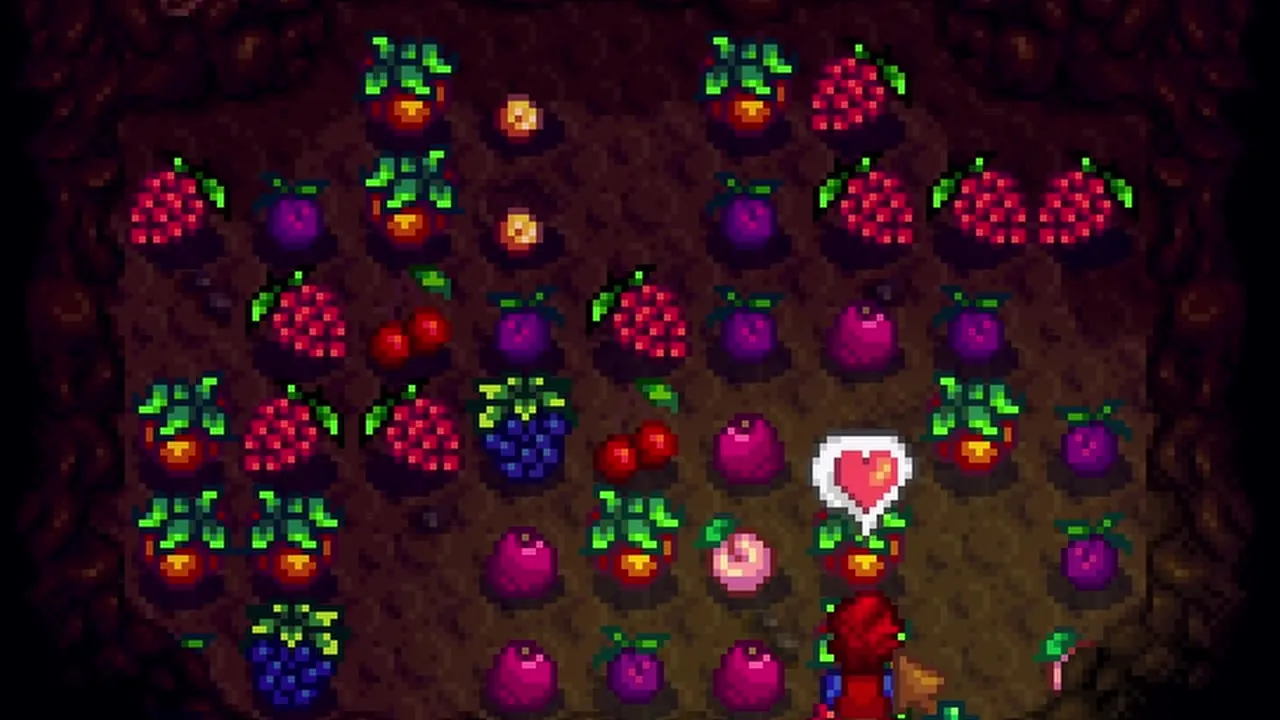
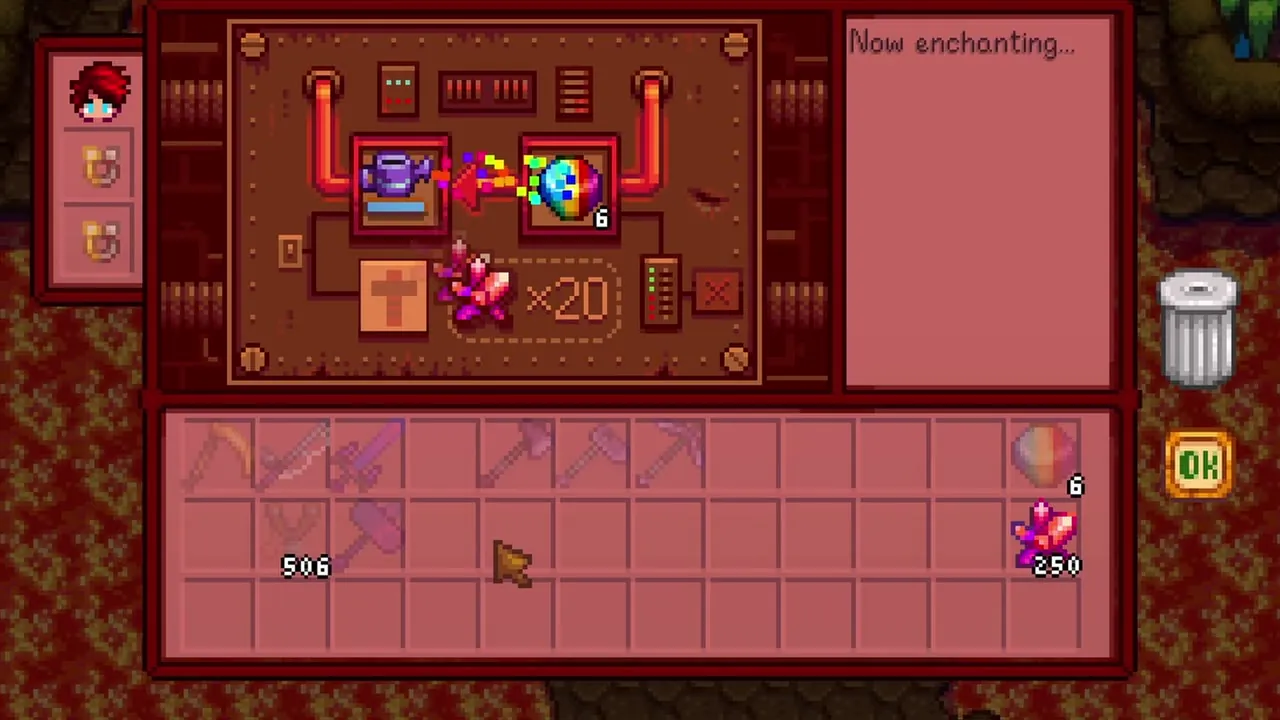
At the Forge, choose enchantments that support the tool’s main job. Swift is useful when tool speed matters; Powerful can help break or chop tougher targets; Master increases Fishing skill. Rerolling costs resources, so decide what benefit you are chasing before spending Prismatic Shards.
Efficient, Reaching, or Preserving are not universally bad. Their value depends on the tool and your priorities. Master alone does not create level-19 Fishing; higher temporary levels require additional compatible boosts. Upgrade deliberately rather than treating one favorite enchantment as the only correct answer.
4. Don’t buy animals without choosing their role
My preference is to use rabbits when I want Rabbit’s Feet for gifts and to reserve barn space for other animals. That is a farm-design preference, not proof that sheep are worse. Rabbits live in coops and occasionally produce Rabbit’s Feet instead of wool.
Sheep can produce wool daily with the right friendship and Shepherd setup, and an Auto-Grabber removes manual shearing. Golden Animal Crackers and looms can make them valuable. Compare output, professions, available space, and your goals before buying. The mistake is choosing an animal without knowing what you want from it.
5. Don’t sell productive animals for a quick payout
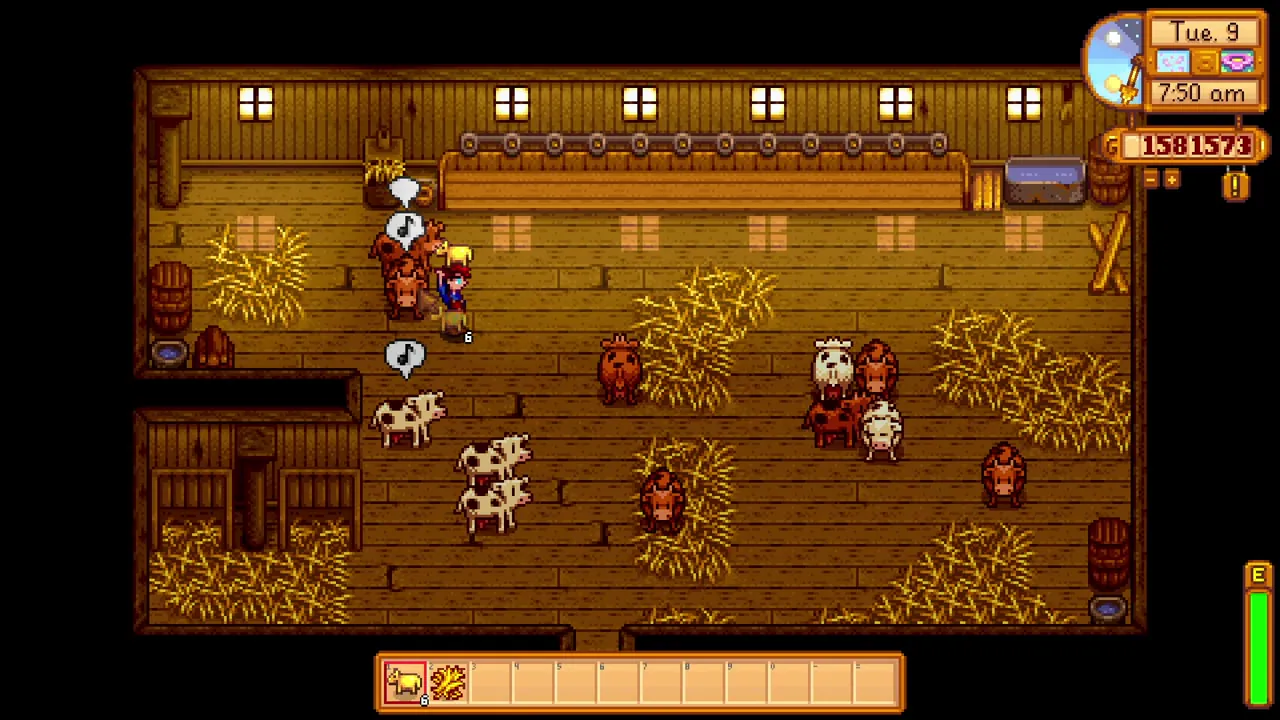
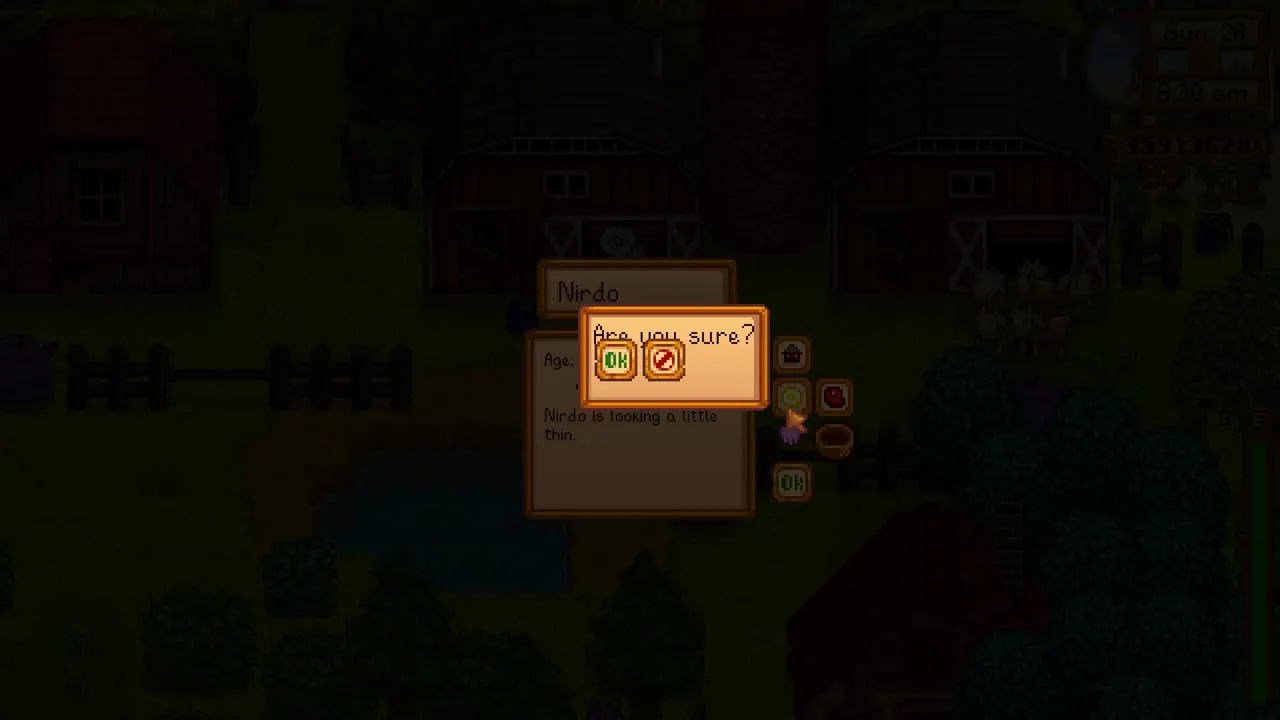
Selling an animal gives a one-time payment while removing its future production. A pig costs 16,000g to buy, so raising one merely to sell it later is a different proposition from keeping it for repeated truffles. Consider the income you give up, not just the sale price.
Selling can still make sense when you need space, want a different animal, or no longer enjoy the setup. Auto-Grabbers collect eligible produce inside barns and coops; they do not collect truffles from the ground. Animals also still need food and care. Automation reduces chores, but it does not make every animal completely hands-off.
6. Don’t rely on one mining tool
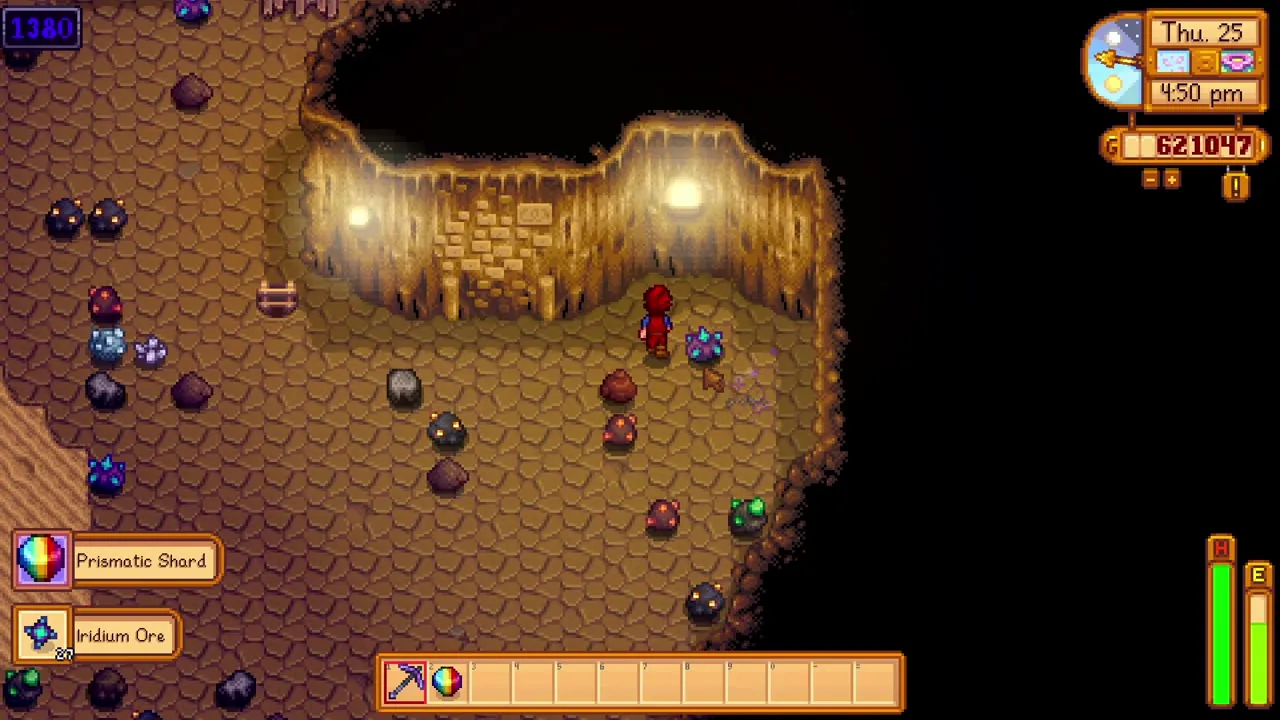
Explosive Ammo can clear rocks quickly, and I enjoy using it with a slingshot once the controls feel natural. It needs suitable impact targets, so walls and enemies affect where you can detonate it. It is not simply a cheaper bomb you can fire anywhere.
Regular bombs remain useful in open clusters of rocks, and a pickaxe handles precise cleanup. Carry a mix for Skull Cavern and learn when to switch. Neither explosives nor speed replace health management. My recommendation is to stop relying on one method, not to throw every bomb away.
For a more detailed walkthrough, see my Iridium Ore farming guide.
7. Don’t build a Slime Hutch unless you want one
A Slime Hutch is a specialized building. If your current goals are crops, bundles, or a simpler animal routine, it may be a low priority. You do not need one just because Robin offers it.
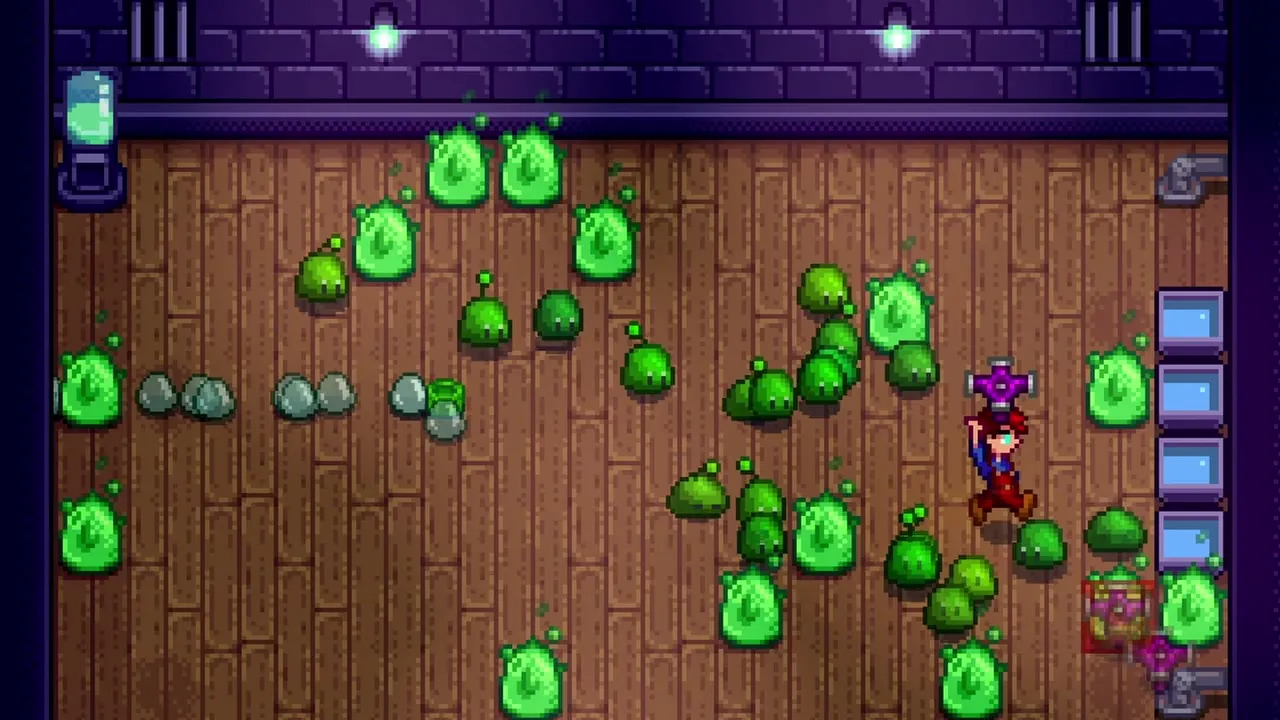
It can still be fun for breeding slimes and collecting slime for eggs. The hutch’s Slime Balls are part of that setup; hatching slimes elsewhere does not duplicate every benefit of the building. If you like the project, build it. If you only want an easy income stream, compare it with the production systems you already understand.
8. Don’t ignore luck—or expect it to affect everything
Check the Fortune Teller before a planned Skull Cavern run, and consider luck buffs when they help the task. The right combination can improve opportunities such as ladders and treasure rooms, but luck does not improve every random outcome.
Geode contents are unaffected by daily luck. Open them on whichever day is convenient. Bad luck days are also useful for woodcutting, organization, and decorating. Treat luck as one planning input, not a rule that prevents you from enjoying the game whenever the spirits are displeased.
For a more detailed walkthrough, see my ring guide.
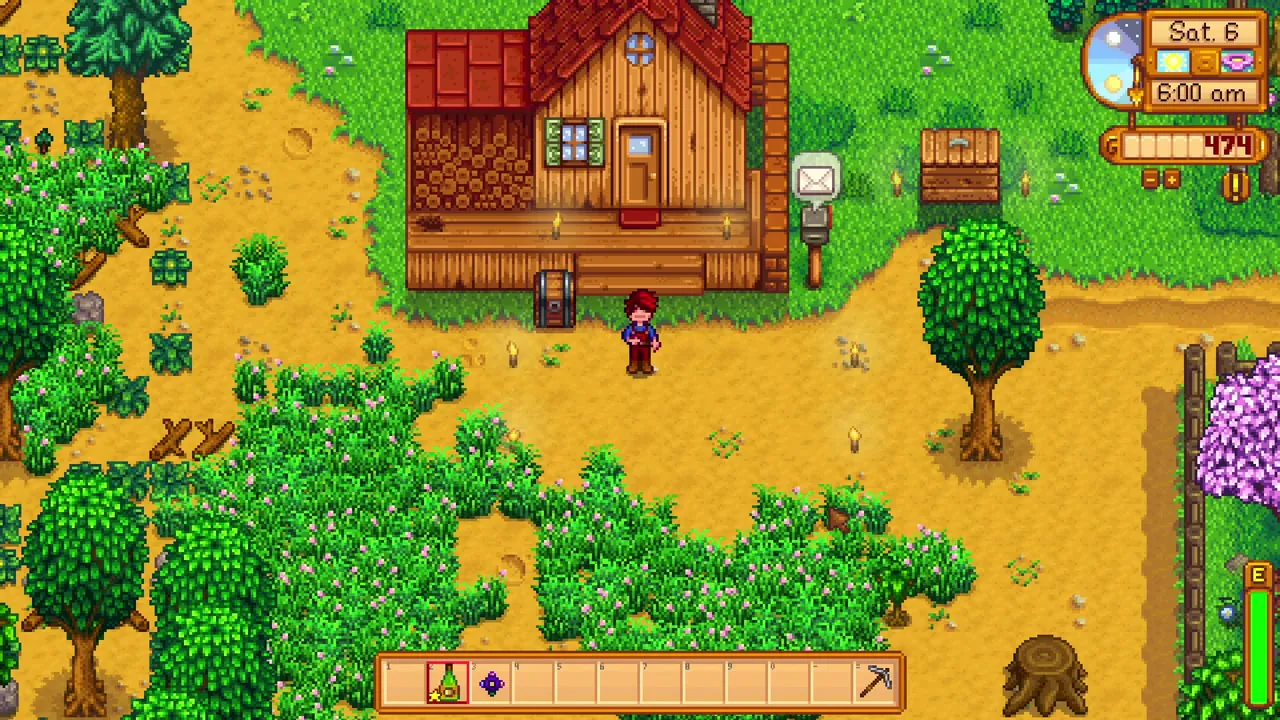
9. Don’t chase Perfection before you enjoy the farm
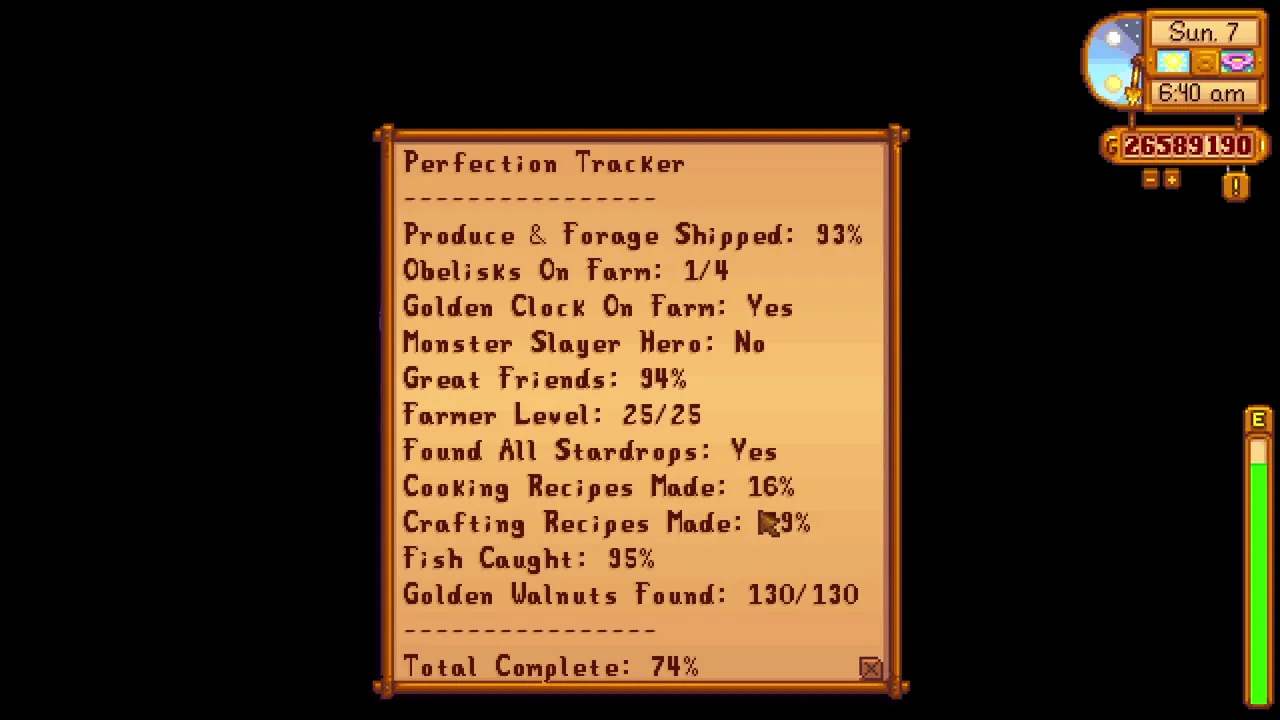
Perfection is a long-term collection and progression goal. Tracking every requirement from day one can be satisfying for a planned challenge, but it can also turn your first farm into an exhausting checklist.
There is no general deadline forcing you to complete Perfection in your first year. Learn systems gradually, keep useful items, and build friendships as you go. When the goal starts sounding fun, review the remaining requirements and work through them. The problem is not planning ahead; it is optimizing for a goal you do not actually enjoy.
10. Don’t upgrade the house without a reason
Upgrade the farmhouse when its features support your next goal. The first upgrade costs 10,000g and 450 wood and adds a kitchen and the ability to marry. The second costs 65,000g and 100 hardwood and adds more space and the nursery.
If you are focused on early income, tools, sprinklers, and processing machines may deserve the money first. If you want marriage or cooking, the kitchen can be a good early purchase. For temporary outdoor cooking, use a Cookout Kit when you have its recipe; an ordinary Campfire is not a cooking station. Make the purchase for a reason, rather than treating a larger house as automatic progress.
For a more detailed walkthrough, see my money-making guide.
Bonus: Don’t let anyone tell you you’re playing wrong
If you love fishing, fish. If you want a decorated house and a family, build them. If a Slime Hutch or a sheep farm sounds fun, those are good reasons to try one.
These recommendations explain tradeoffs so you can choose deliberately. They are not a set of rules for a correct save. The most important mistake to avoid is letting somebody else’s efficiency preferences replace the things you enjoy about Stardew Valley.
Watch the full video
