

To make money in Stardew Valley on a new farm, I would start with fishing, useful Help Wanted requests, and a crop field you can comfortably maintain. As you unlock machines, process eggs, milk, and crops. Later, Ancient Fruit, flower honey, and other repeatable systems can earn gold without consuming every morning. These 20 methods follow my video from early options to late-game setups. “Easy” describes the routine once a setup is available; pigs, mastery rewards, and Ginger Island still require substantial progression.
Watch the companion video on YouTube, or jump to a tip below. The written advice reflects Stardew Valley 1.6; later sections include progression spoilers.
Table of ContentsOpen contents
Choose a method for your stage
| Stage | Start with | Main tradeoff |
|---|---|---|
| First spring | Foraging, fishing, Help Wanted | Active time each day |
| Machines and animals unlocked | Mayonnaise, cheese, crop processing | Feeding and machine capacity |
| Established farm | Ancient Fruit, wine, truffles, flower honey | Upfront buildings and unlocks |
| Mastery and late game | Animal Crackers, Mystic Trees | Substantial progression required |
1. Forage along a regular route
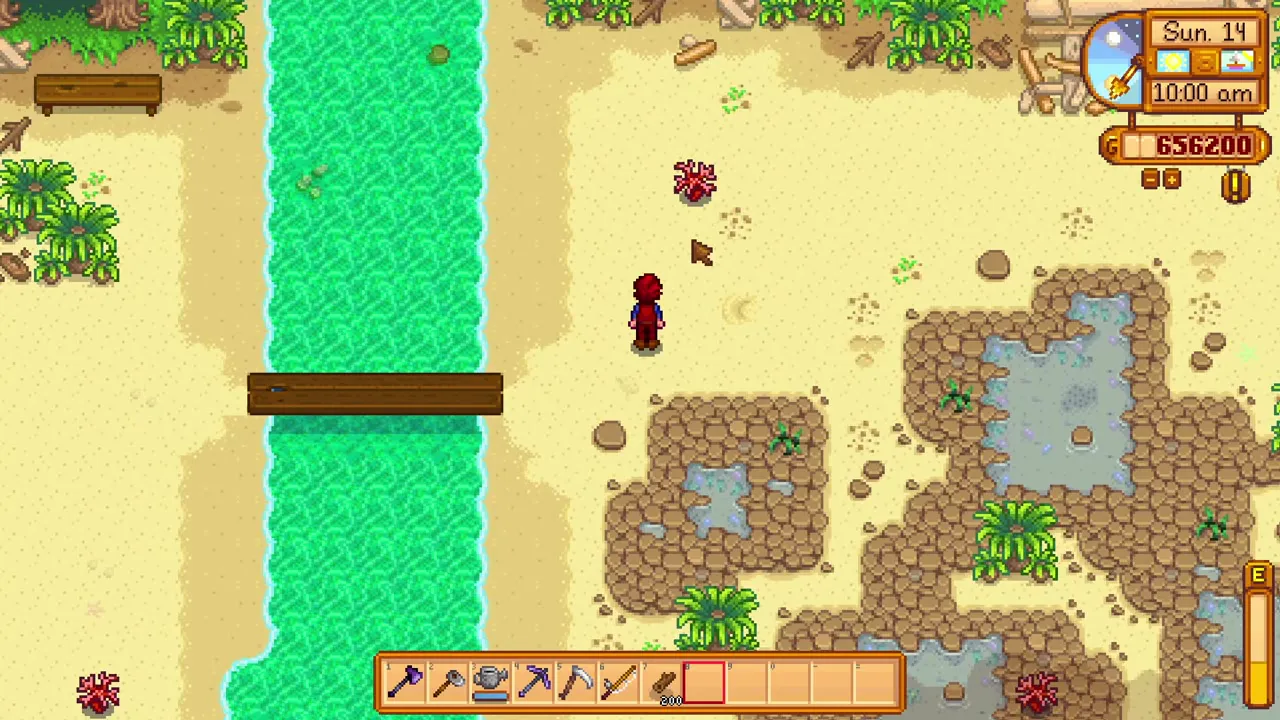
Foraging is the easiest money in Stardew Valley because it costs nothing. Pick up daffodils, leeks, horseradish, spring onions, berries, shells, coral, and anything else the valley carelessly leaves on the floor. Then sell what you do not need for bundles, gifts, energy, or crafting. The mistake is wandering randomly.
Build a route. Check the forest, the beach, the mountain, and the bus stop while you are already traveling through them. Repairing the beach bridge for three hundred wood also opens the eastern tide pools, where coral and sea urchins can become useful early cash. Salmonberry and blackberry seasons are usually better for collecting energy than creating a financial empire, but that food lets you fish, mine, and chop for longer.
Free energy creates paid work. Foraging will not make you a millionaire by itself. But before your farm has an economy, the ground does.
2. Take Help Wanted requests that fit your plans
The Help Wanted board outside Pierre’s is one of the easiest early money makers because it pays you extra for doing things you were probably going to do anyway. A villager might ask for a crop, fish, mineral, or monster kill. You complete the request, collect the gold, gain friendship, and sometimes still keep the item you gathered.
The secret is knowing when to say no. If somebody wants a fish you can catch today, excellent. If they want the only cauliflower you need for a bundle, they have chosen the wrong farmer. Check the board whenever you pass town, accept jobs that overlap with your plans, and keep a few common crops, fish, and minerals in chests so delivery quests become nearly free money.
This is not glamorous. Neither is being unable to afford a backpack because you ignored a man offering several hundred gold for one sardine.

3. Use early fishing to fund your farm
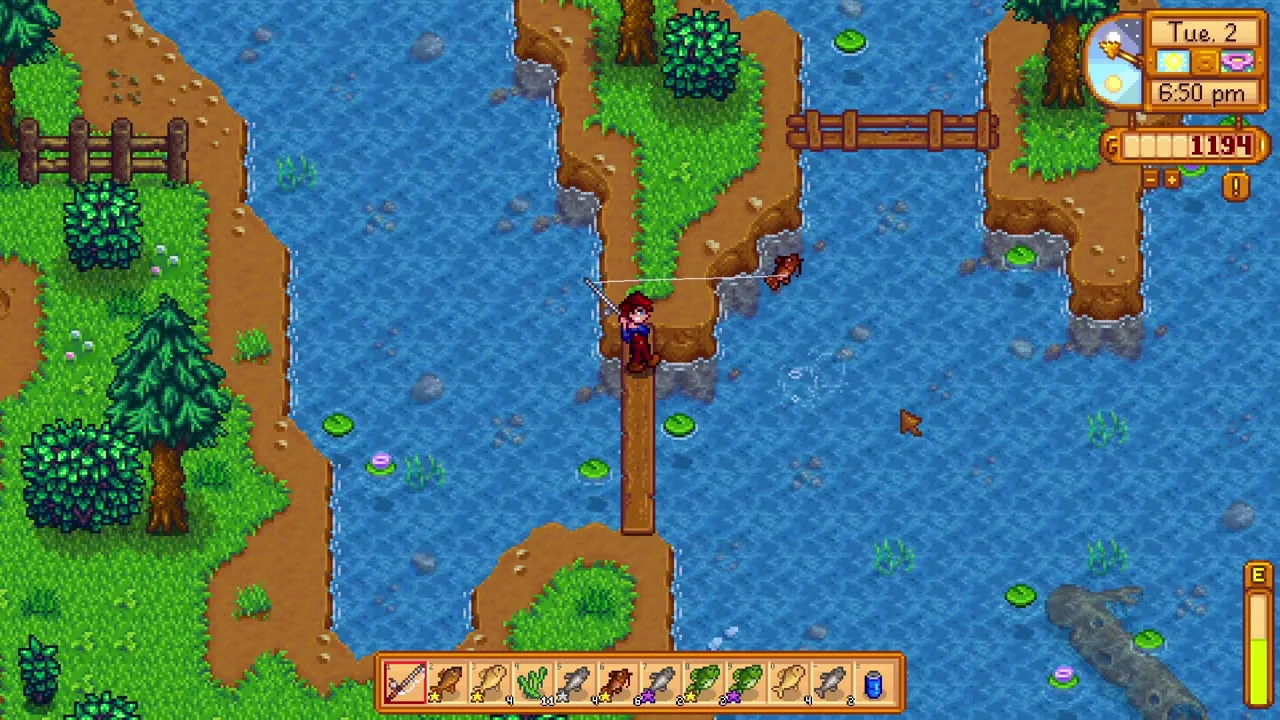
Fishing is the first real income spike available to a new farm. You can start on day two, the rod is free, and a successful fishing day can fund seeds, tool upgrades, and the first backpack long before your parsnips become impressive. The mountain lake is a reliable early location, while the ocean gives useful catches and a chance to meet Willy without pretending you only visited for conversation.
If the minigame feels impossible, buy the Training Rod. It makes the fishing bar larger and limits what you can hook, which sounds restrictive until you realize catching cheaper fish earns more than losing expensive fish. Use forage as energy. Bring a chest. Fish until late. Sell most of the catch, but keep bundle fish and a few cheap ones for food.
Fishing gets easier as your skill rises, so the activity that makes money also makes its own future version less annoying. It is one of the cleanest deals in the game.
For a more detailed walkthrough, see my complete fishing guide.
4. Smoke your most valuable fish
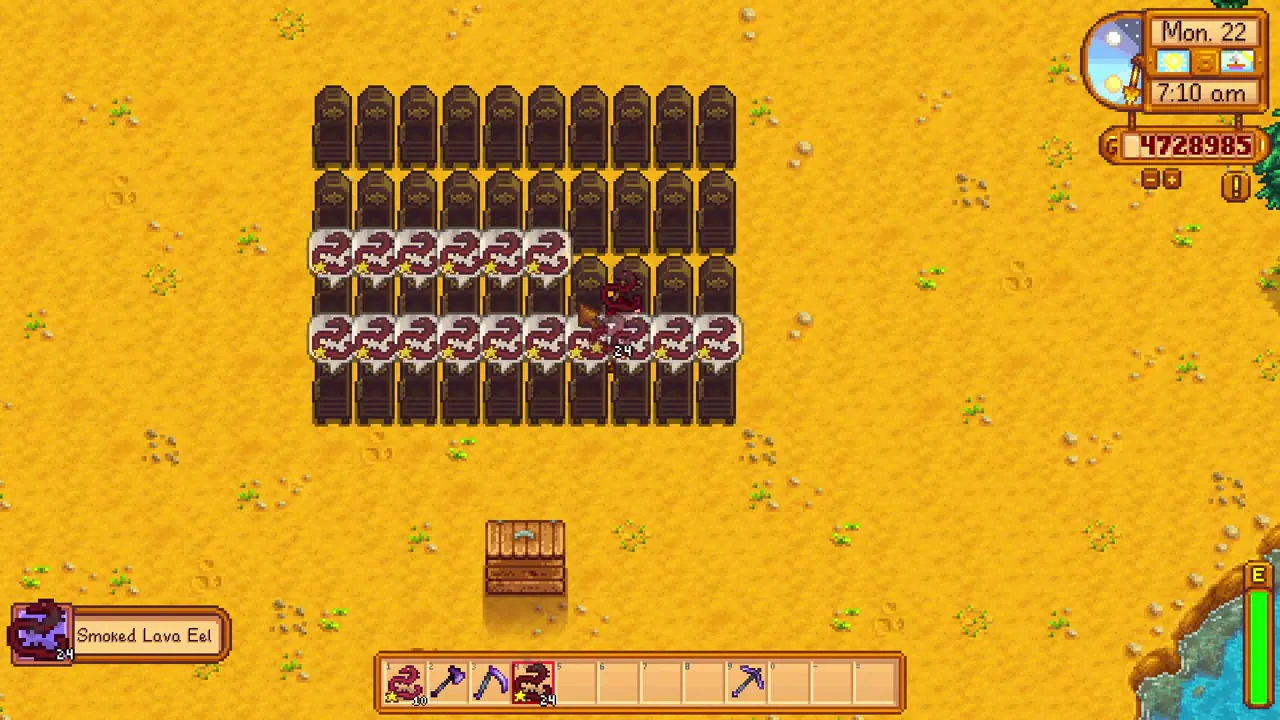
Once you have a Fish Smoker, fishing stops being early-game pocket money and starts behaving like a business. The smoker takes one fish and one coal, finishes in only fifty in-game minutes, doubles the fish’s value, and preserves its quality. That last part is enormous. An iridium-quality fish becomes an iridium-quality smoked fish. With the Fisher and Angler professions raising fish prices, and Artisan raising the smoked product again, one good catch can become absurdly valuable.
Smoke expensive fish first. Do not burn coal doubling something worth almost nothing while a lava eel is sitting in your chest wondering why you hate money. The recipe costs ten thousand gold at Willy’s, and the Riverland Farm begins with a smoker.
5. Plant crops that keep producing
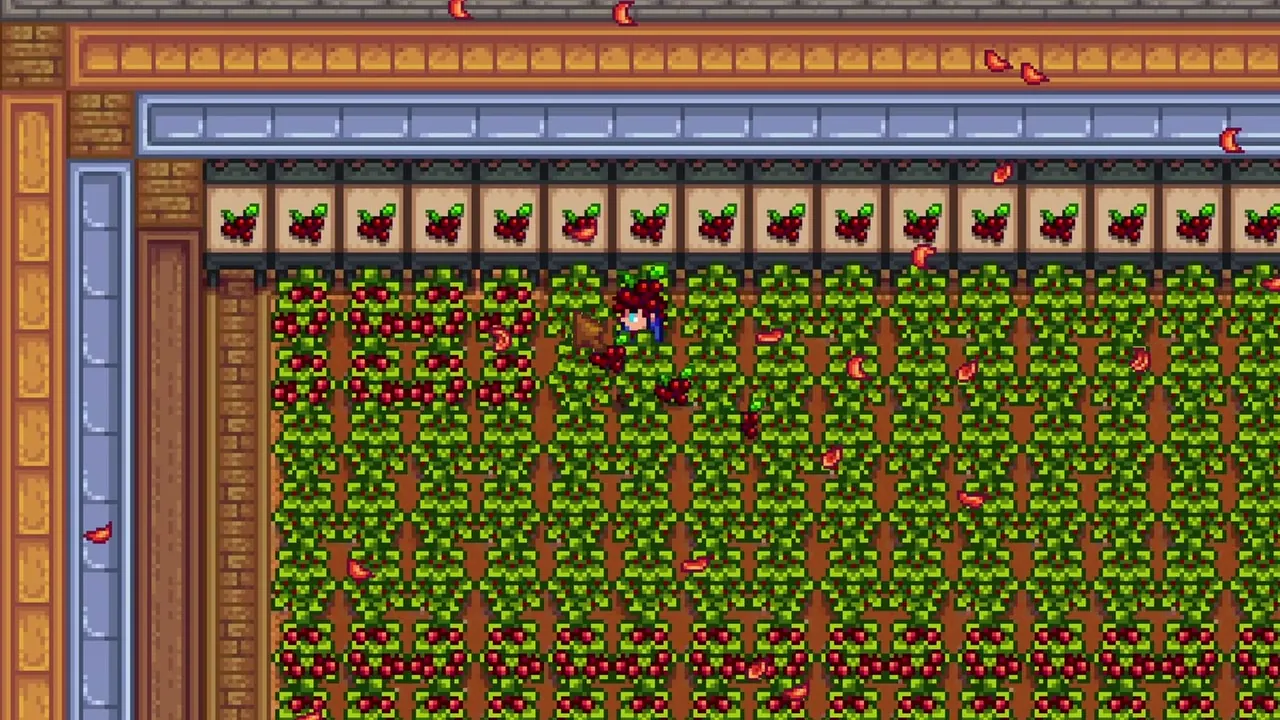
The easiest crop is not always the crop with the biggest number. It is often the crop you only plant once and harvest multiple times. Strawberries in spring, blueberries in summer, and cranberries in fall keep producing after the first harvest. That means less buying, less planting, and more days where you simply walk into the field and collect money.
The timing matters. Strawberry seeds are normally bought at the Egg Festival on Spring 13. Plant them immediately for harvests that year, or save some for an earlier start next spring once you have a Seed Maker. Blueberries and cranberries produce multiple berries per harvest, making one planted tile feel financially overqualified. Sprinklers make all three dramatically easier.
Because the best crop is not the one that earns the most gold in a fantasy spreadsheet where watering takes zero time. It is the one your actual farm can maintain without turning every morning into unpaid agricultural labor.
For a more detailed walkthrough, see my seasonal crop guide.
6. Craft and sell Tea Saplings
This method used to be completely ridiculous. Now it is merely very good. Reach two hearts with Caroline and trigger her sunroom event through the kitchen at Pierre’s on a non-rainy day between 9am and 5pm. She sends you the recipe the next day. Each sapling uses two seasonal wild seeds, five fiber, and five wood, and sells for two hundred and fifty gold.
That price was reduced in version 1.6, so if somebody tells you every sapling sells for five hundred, they are giving you financial advice from the past. But the materials are still cheap, wild seeds can be crafted from forage, and saplings do not require coal, machines, or weeks of growing before you can sell them.
They are especially useful when your chests are full of fiber and seasonal seeds that were otherwise planning to retire there. Tea Saplings are not infinite free money. They are something better for the early game: a pile of ordinary materials wearing a two-hundred-and-fifty-gold disguise.

7. Turn eggs into mayonnaise
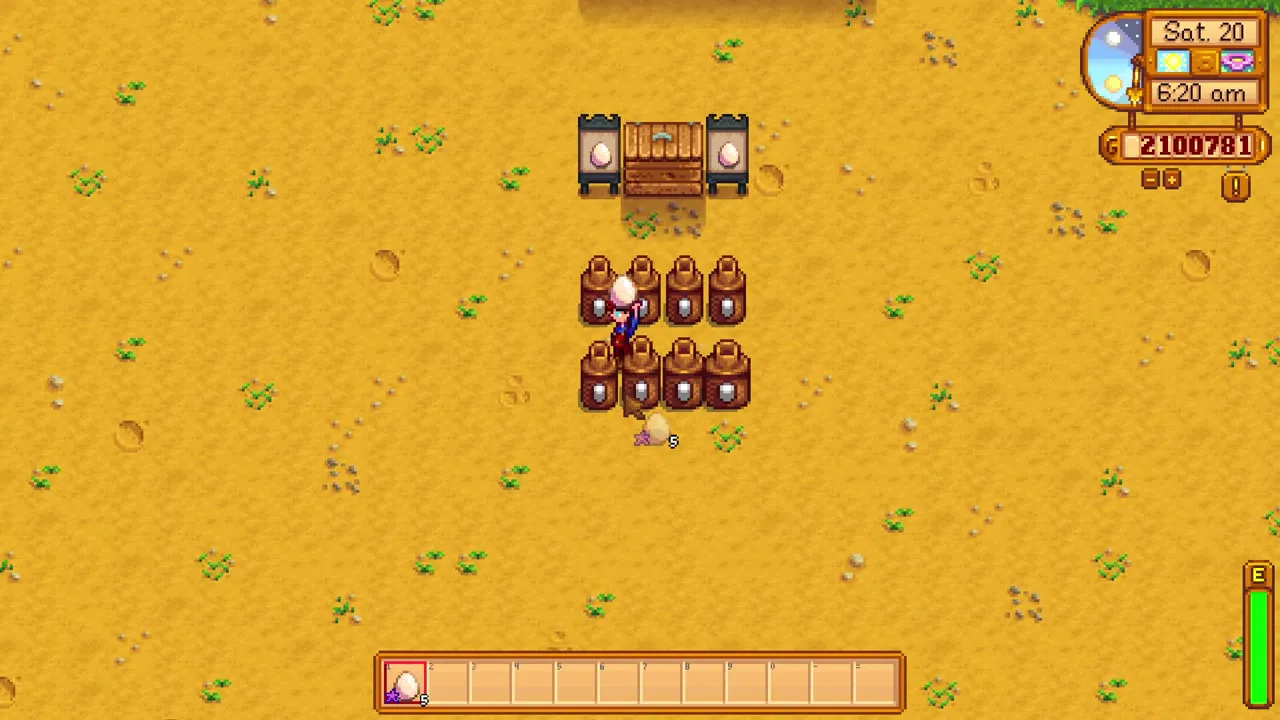
Chickens are not the richest animals in Stardew Valley. They may be the easiest. A basic coop is affordable relatively early, chickens produce eggs almost every day when happy and fed, and a Mayonnaise Machine turns one egg into a more valuable artisan good in only a few hours. A Deluxe Coop adds an auto-feeder, which works while hay is available in your silos.
Add an Auto-Grabber later and the chickens basically deposit ingredients into a box for you. Keep grass available outside when the weather allows, store hay in a silo, pet the birds, and process the eggs. Large eggs produce gold-quality mayonnaise, so friendship improves both consistency and value. There are more explosive money strategies. But mayonnaise is dependable, simple, and available while your farm is still held together by wooden chests and anxiety.
Sometimes easy money is just twelve chickens doing their little best.
8. Turn milk into cheese
Cows follow the same beautiful logic. Buy animal. Receive product. Put product into machine. Pretend you invented industry. Milk becomes cheese in just a few hours, large milk creates gold-quality cheese, and the finished product sells for considerably more with the Artisan profession. Cheese is also excellent mining food. That means you can sell most of it while keeping a stack to survive Skull Cavern without overwriting your luck and speed buffs.
Goats produce less often, but goat cheese is more valuable and can be aged in casks later if you want to push it further. The real advantage is routine. Once your barn has hay, an auto-feeder, and an Auto-Grabber, the work becomes a short machine cycle rather than a full farming project. Crops die at the end of a season.
Cows simply wake up and continue funding your lifestyle.
9. Process crops before selling
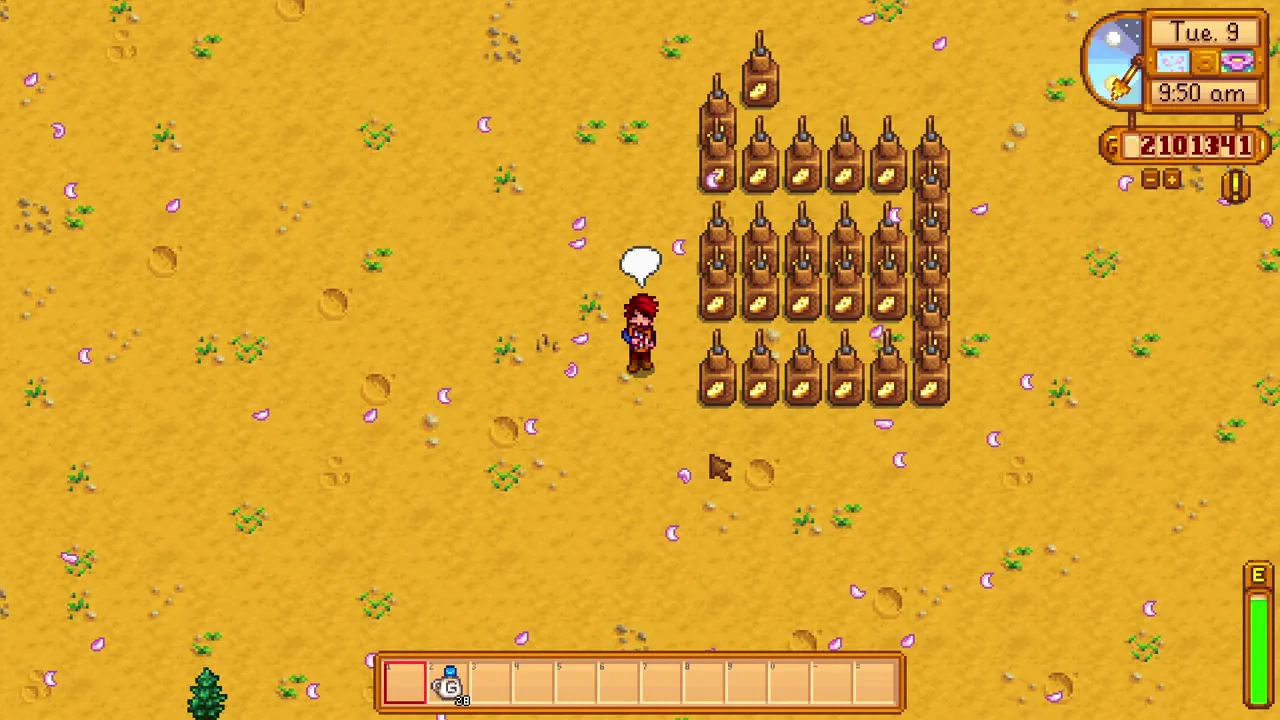
A crop is money. A crop inside the right machine is more money. Preserves Jars turn fruit into jelly and vegetables into pickles using a simple formula: twice the crop’s base value, plus fifty gold. Kegs turn fruit into wine worth three times its base value and most vegetables into juice worth two and a quarter times their base value.
The practical rule is easy. Use kegs for high-value fruit like melons, starfruit, pineapple, and ancient fruit. Use jars for cheaper produce and anything you need processed faster. Quality does not improve the finished product, so sell gold and iridium crops when you need cash and feed normal-quality produce to machines first. And build enough machines.
Growing five hundred pumpkins with twelve jars does not create profit. It creates a chest full of vegetables waiting for management to solve the staffing crisis.
10. Turn hops into Pale Ale
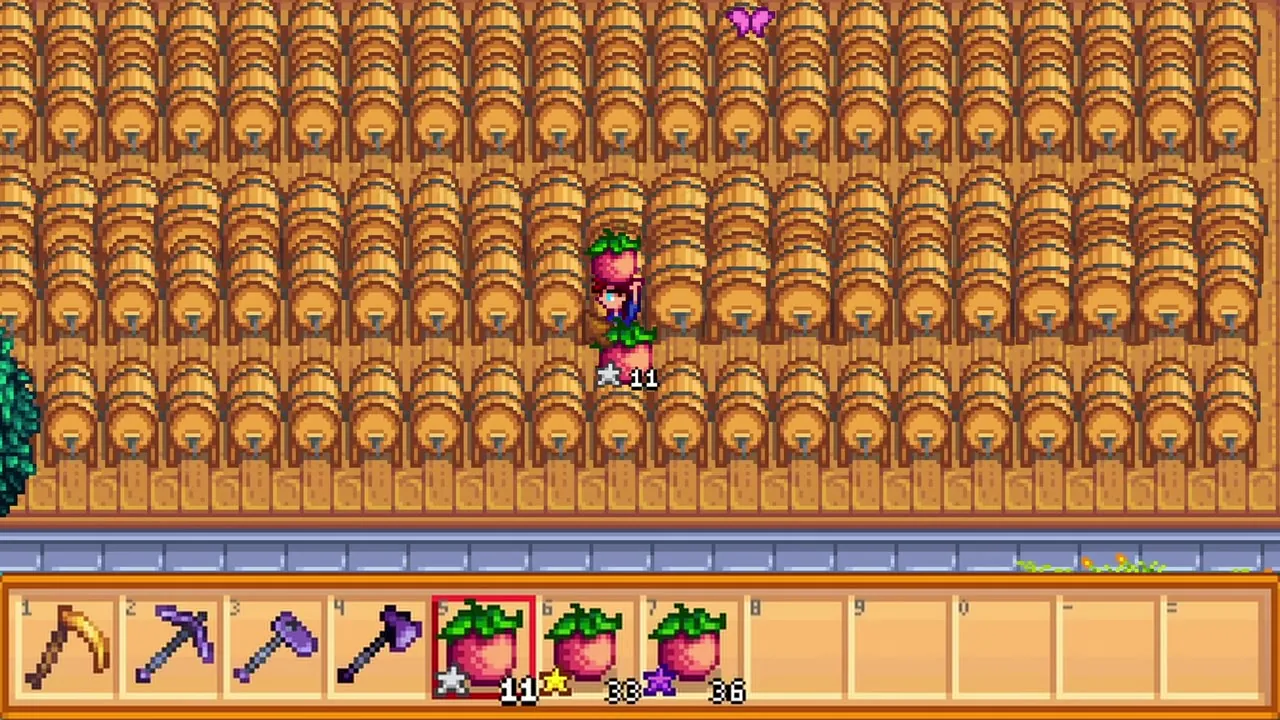
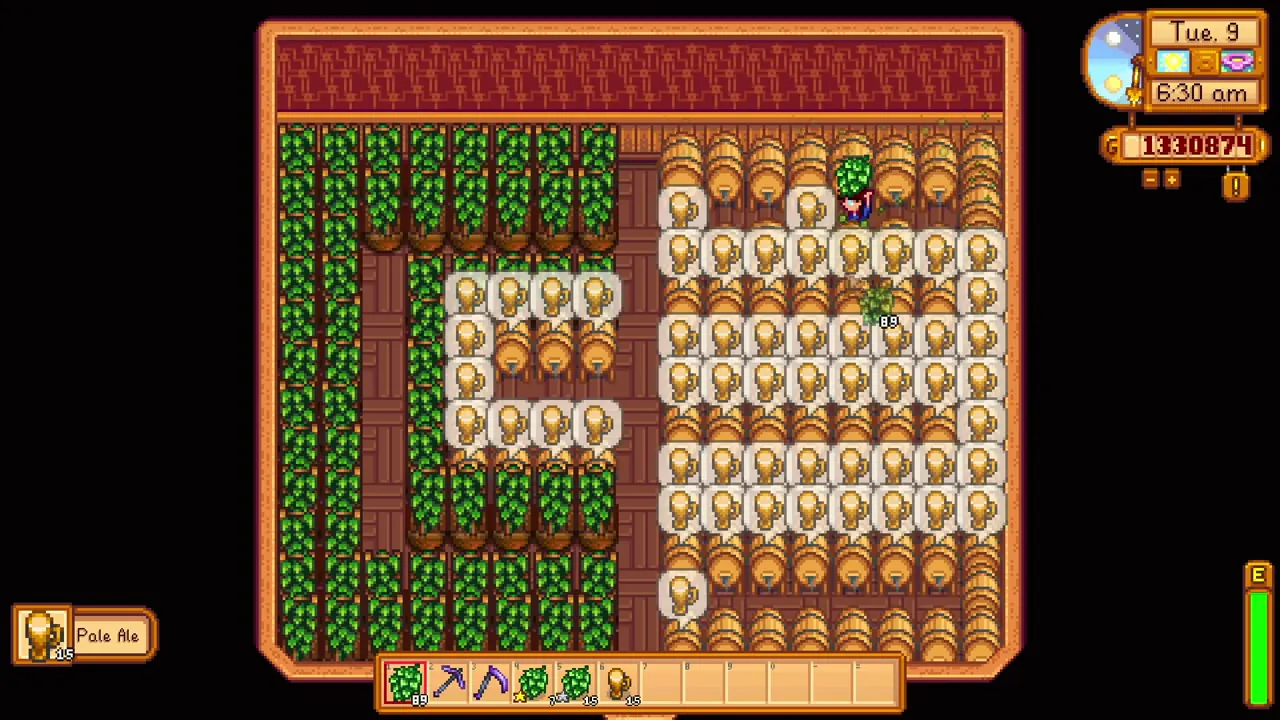
Hops look terrible if you only inspect the raw crop. One hop sells for twenty-five gold. That is not a money maker. Put it in a keg, however, and it becomes Pale Ale worth three hundred gold before Artisan. Better still, hops regrow every day after maturing, while Pale Ale processes far faster than wine.
This gives hops extraordinary profit from a relatively small field. It also gives you a job. Hops grow on trellises, require daily harvesting, and can fill chests faster than an undersized keg setup can process them. Leave walking lanes. Build the kegs before the harvest overwhelms you. Use Junimo Huts later if you expand. Hops are one of the easiest ways to make serious summer money.
They are also how your relaxing farm becomes a beverage company with a demanding production schedule.
11. Build a Mushroom Log forest
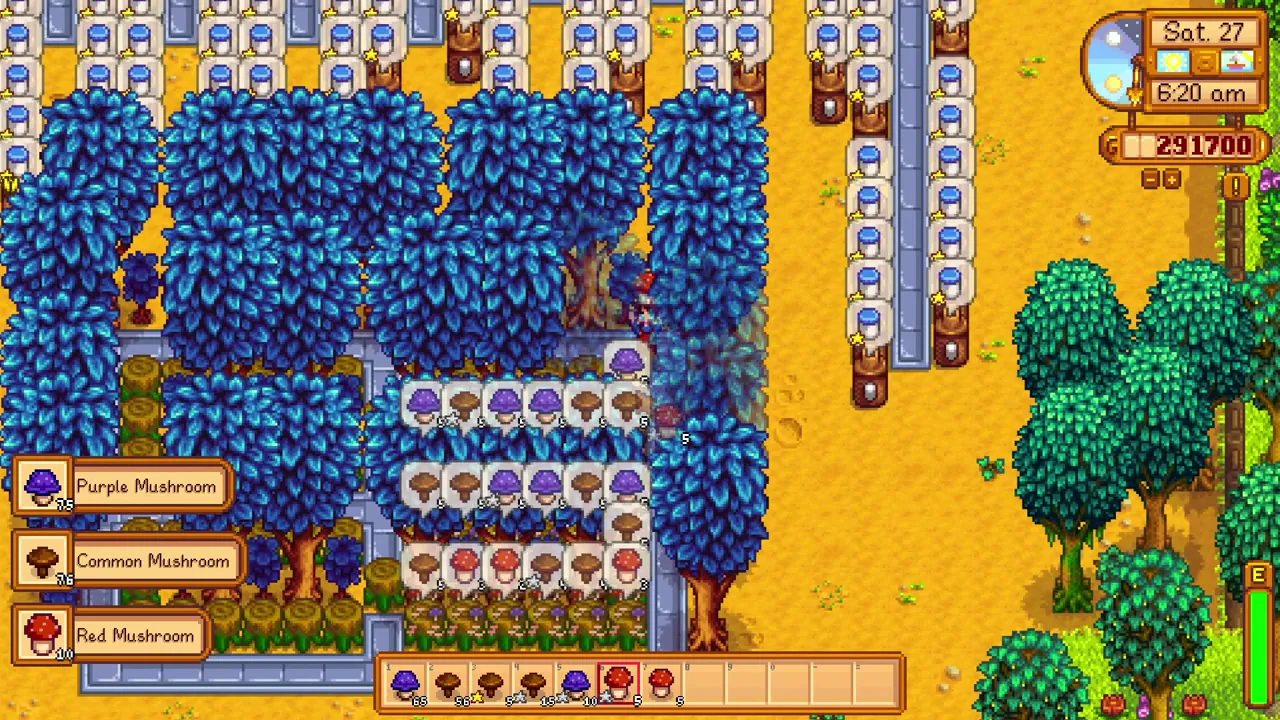
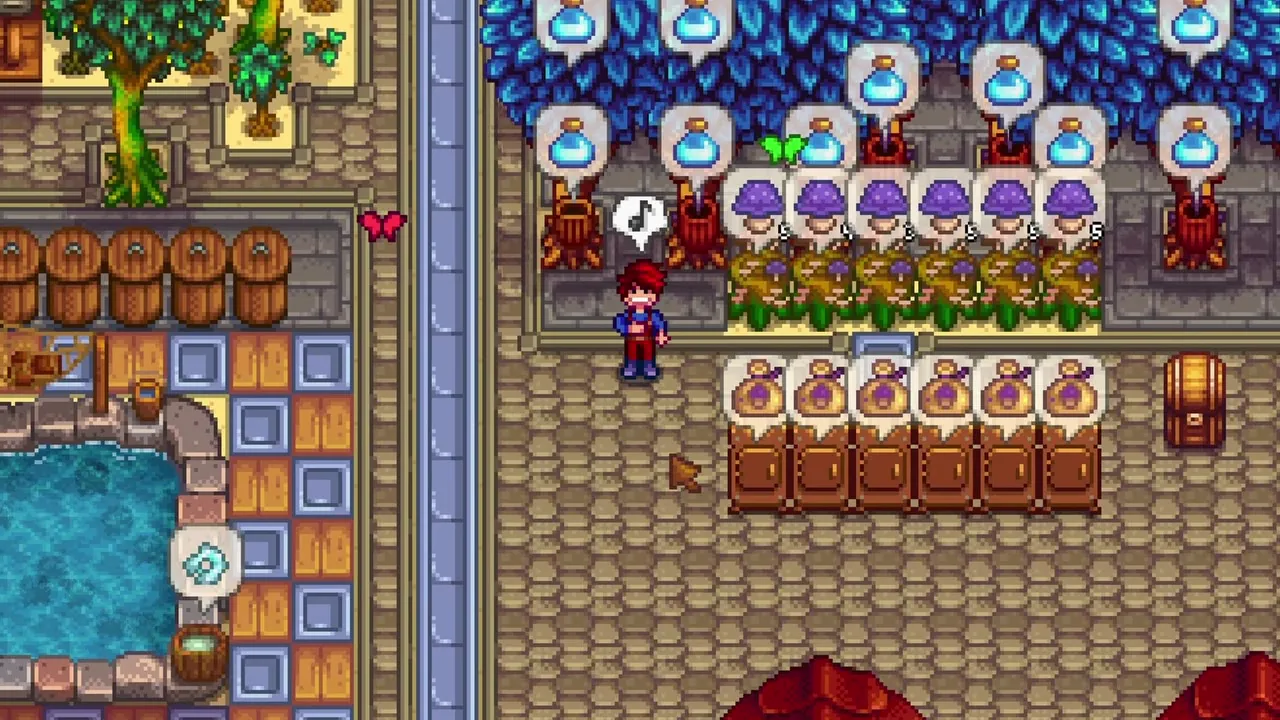
Stardew Valley 1.6 quietly added one of the best low-maintenance money makers in the game. Mushroom Logs. Each log costs ten hardwood and ten moss, produces every four days, and works faster when rain occurs. The number of mushrooms increases with nearby wild trees, reaching as many as five when the log has enough trees around it.
Tree type also influences the result. Oaks encourage morels. Pines encourage chanterelles. Mystic Trees encourage purple mushrooms. So instead of leaving a tree area as unused chaos, place logs between the trunks and make the forest pay rent. Sell high-quality mushrooms directly, pickle individual mushrooms in jars, or load five of one type into a Dehydrator for batch processing.
The setup works through every season and needs no watering, seed shopping, or animal petting. It is farming for people who would prefer the trees handle the farming.
12. Dehydrate surplus fruit
The Dehydrator is not a replacement for every keg. It solves a different problem. One machine accepts five pieces of the same fruit or mushroom and finishes overnight. That means it can burn through huge harvests far faster than one keg can turn fruit into wine. Use it for abundant lower-value fruit, excess cranberries, blueberries, grapes, mushrooms, or anything currently forming a produce mountain in your chests.
Save your most valuable fruit for kegs when maximum profit matters. Use Dehydrators when speed, capacity, and sanity matter. This is especially strong when your farm produces more than your artisan equipment can handle. A crop sitting in storage is potential money. A dried product is money you can actually spend. The Dehydrator is not the king of profit per fruit.
It is the king of looking at five hundred cranberries and saying, “I can fix this by tomorrow.”
Use five matching items of the same quality. Some produce has special rules: grapes become raisins, and Red Mushrooms cannot be dehydrated.
13. Let pigs find truffles
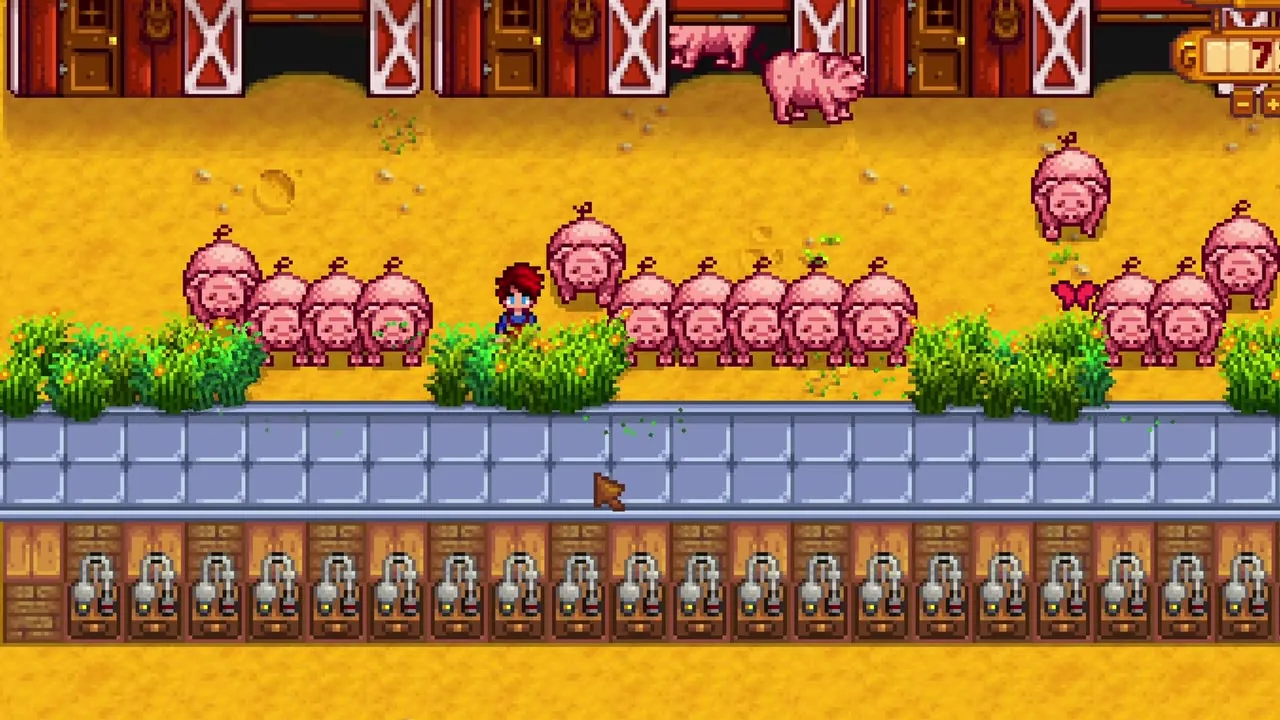
Pigs are expensive. Then they begin digging thousand-gold objects out of the ground and the price feels less offensive. Adult, fed pigs can find truffles outside on dry days outside winter when they have suitable open ground. Truffles benefit from Gatherer, giving a chance at an extra pickup, and Botanist makes every truffle iridium quality.
An iridium-quality truffle sells for 1,250g; Botanist guarantees that quality when you collect it. Truffle Oil sells for one thousand four hundred and ninety-one gold with Artisan. So process them if you want maximum gold and have enough Oil Makers. Sell iridium truffles directly if the small difference is not worth feeding machines forever. Give pigs open ground, keep them happy, and collect after they have spent the day performing agricultural archaeology.
They do nothing outside in winter, which is the drawback. For the other three seasons, a full barn of pigs can make your crop fields look financially decorative.
14. Build Bee Houses around flowers
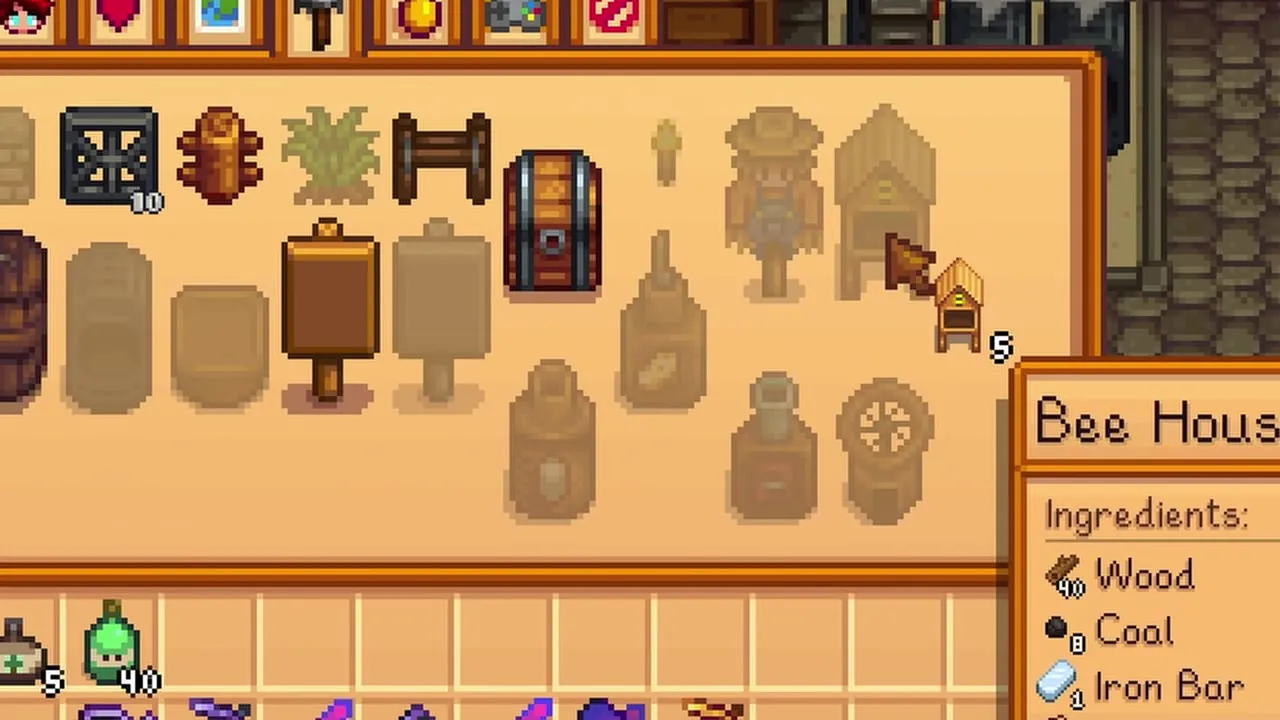
Bee Houses are almost insultingly easy once they are built. Place them outside, keep a blooming flower within range, and collect honey every four nights. The flower is not consumed. One flower can influence multiple Bee Houses, which means a tiny patch of color can control an entire honey empire. Fairy Rose Honey is the prize.
It sells for six hundred and eighty gold normally, or nine hundred and fifty-two with Artisan. On the regular farm, Fairy Roses only grow in fall. On Ginger Island, seasons do not end your crops, so a Fairy Rose can power year-round honey production. Just do not pick the flower while collecting. Fill your inventory if necessary, protect it with the layout, and treat that flower like the chief executive officer it has become.
Do not turn Fairy Rose Honey into mead. That destroys most of the value. Sometimes the easiest way to make money is to leave the expensive thing alone.
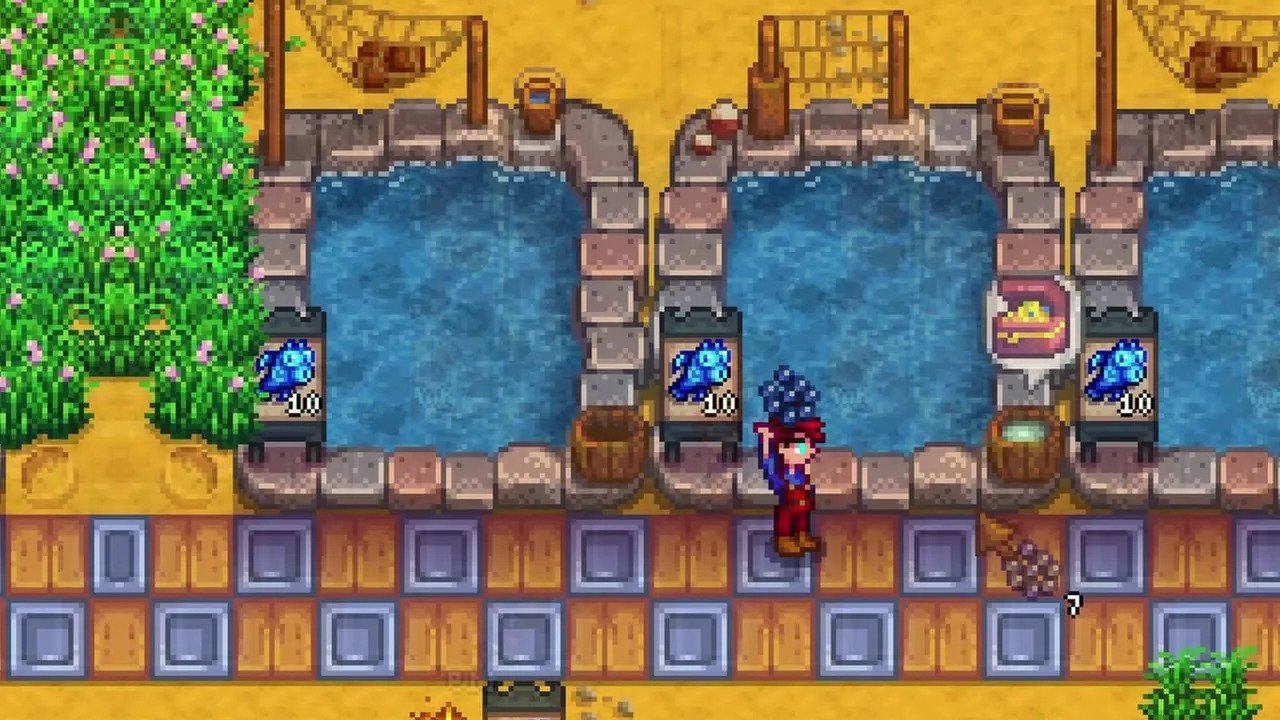
15. Choose useful Fish Pond species
Fish Ponds are slow, passive, and much better than they first appear. Most fish eventually produce roe. Put that roe into a Preserves Jar and it becomes aged roe worth more than the original product. Sturgeon produce roe that becomes Caviar in a Preserves Jar. Lava Eels have exceptionally valuable roe and can also produce useful extras.
Blobfish, Stingrays, and other special fish offer different items, so choose between pure money and resources your farm actually needs. Complete pond quests to raise capacity, then let the population refill itself after you fish some out. After Farming Mastery, a Golden Animal Cracker can permanently double pond output. That turns one passive collection box into two passive collection boxes wearing the same pond.
Fish Ponds will not create the fastest fortune on this list. But they keep working while you farm, mine, decorate, or spend three days deciding where a bench should go.
Legendary fish have special pond restrictions; the ordinary reproduction advice does not apply to every species.
For a more detailed walkthrough, see my best Fish Ponds guide.
16. Make Starfruit Wine
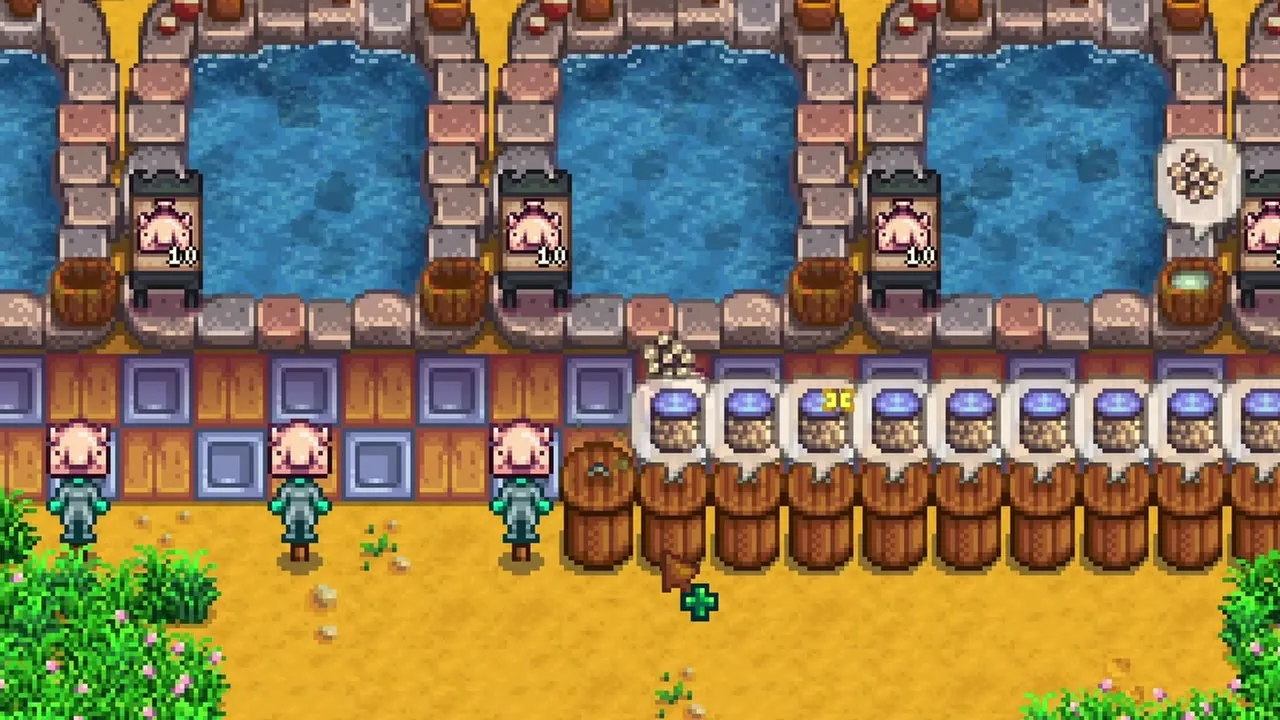
This is where the numbers stop being polite. Starfruit seeds cost four hundred gold at the Oasis. The fruit sells for seven hundred and fifty gold at base quality. Put that fruit in a keg and the wine sells for two thousand two hundred and fifty gold, or three thousand one hundred and fifty with Artisan.
That is one bottle. Grow starfruit in summer, the greenhouse, or on Ginger Island. Use Deluxe Speed-Gro when faster harvests justify the cost. Build the keg capacity before planting a field large enough to frighten your storage system. You can age the wine in casks for even more value, but casks are slow and limited.
Aging is a bonus, not a reason to leave every unaged bottle trapped in a chest. Starfruit has one disadvantage: you must buy and replant the seed after every harvest. It is not the laziest empire. It is the easiest way to turn capital into considerably more capital.
17. Grow an Ancient Fruit greenhouse
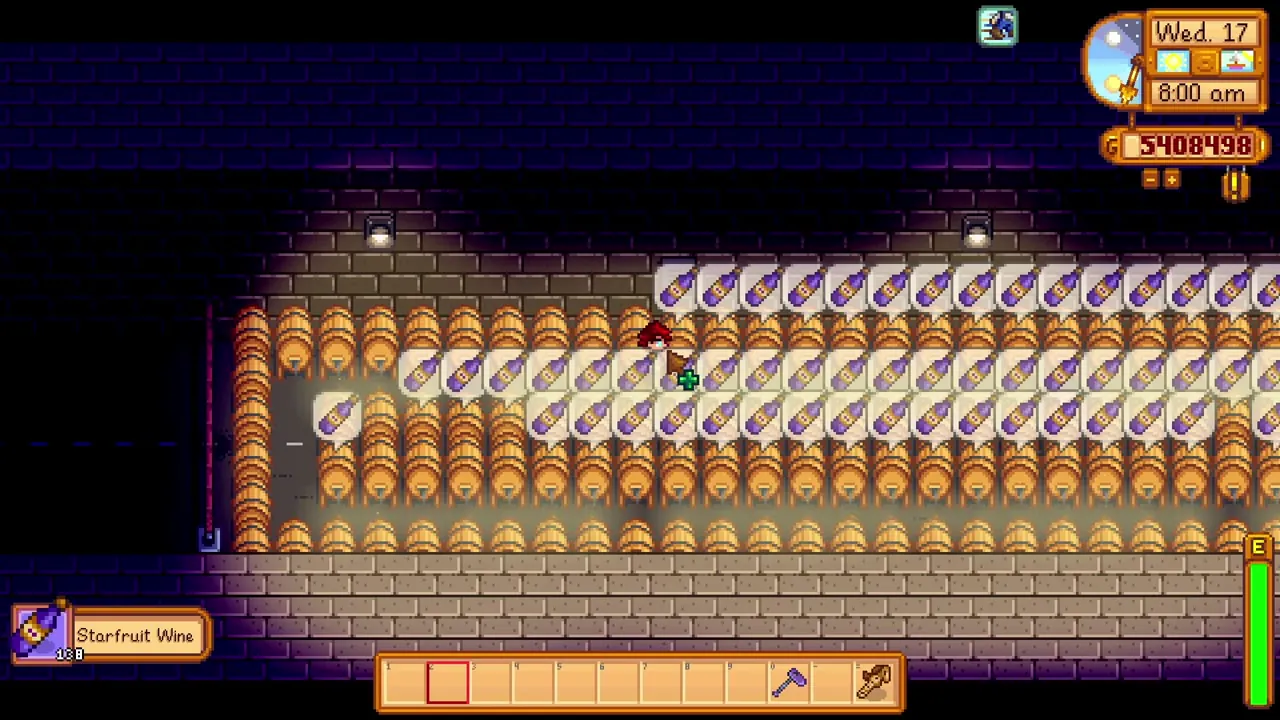
Ancient Fruit is the money maker that eventually removes seed shopping from your life. Find an Ancient Seed artifact, donate it to Gunther, receive the plantable seed and recipe, then use Seed Makers to multiply the first harvests instead of selling them. That beginning is slow. The payoff is permanent. Ancient Fruit takes twenty-eight days to mature, then produces again every seven days.
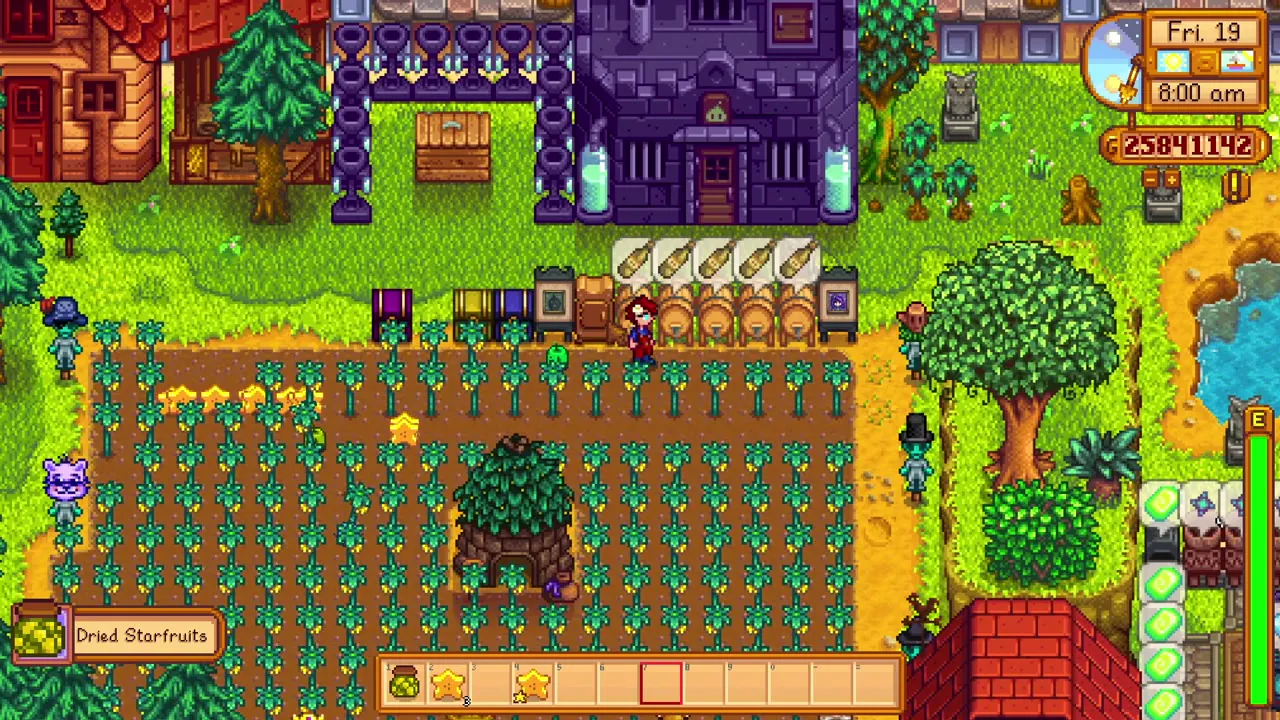
In the greenhouse or on Ginger Island, the plants never die from a season change. Turn the fruit into wine and it sells for one thousand six hundred and fifty gold per bottle, or two thousand three hundred and ten with Artisan. No repeated seed cost. No repeated planting. One harvest per week. Starfruit earns more per bottle.
Ancient Fruit asks less of your soul. And once the greenhouse, sprinklers, and kegs are synchronized, your weekly routine becomes walking through a building and collecting a fortune.
18. Use Golden Animal Crackers
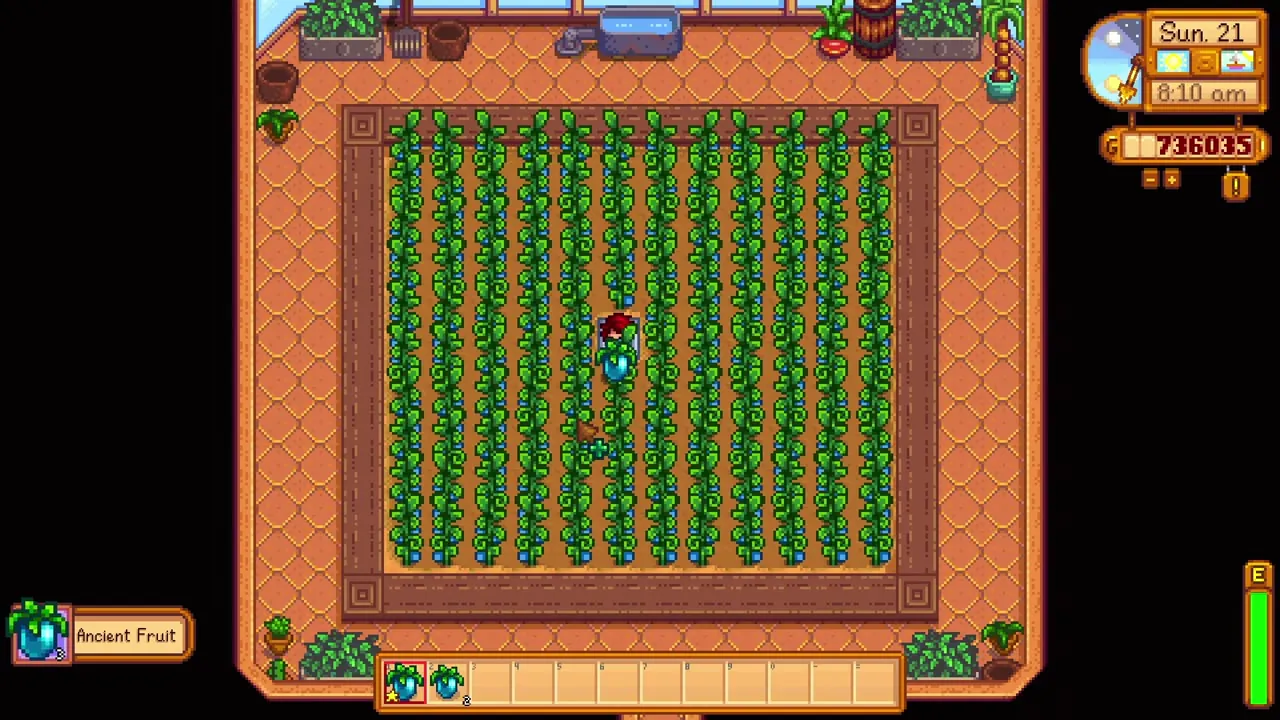
Golden Animal Crackers are one of the most powerful money multipliers added in version 1.6. After claiming Farming Mastery, you can find them from fishing treasure, Skull Cavern treasure rooms, golden mystery boxes, artifact spots, monsters, and several other sources. Give one to an animal and it permanently doubles that animal’s produce. Two eggs. Two milks.
Two feathers. Two wool. The cracker does not work on pigs, because apparently pigs already negotiated a strong contract. Use your first crackers on high-value, reliable animals you intend to keep. Ostriches are excellent because one egg already becomes ten mayonnaise. Sheep can become ridiculous with fast wool production and a Loom setup. Your best coop or barn animal may depend on your professions and machine capacity.
The important part is permanence. You are not buying one extra product. You are doubling every future product from that animal for the rest of its career.
19. Tap Mystic Trees
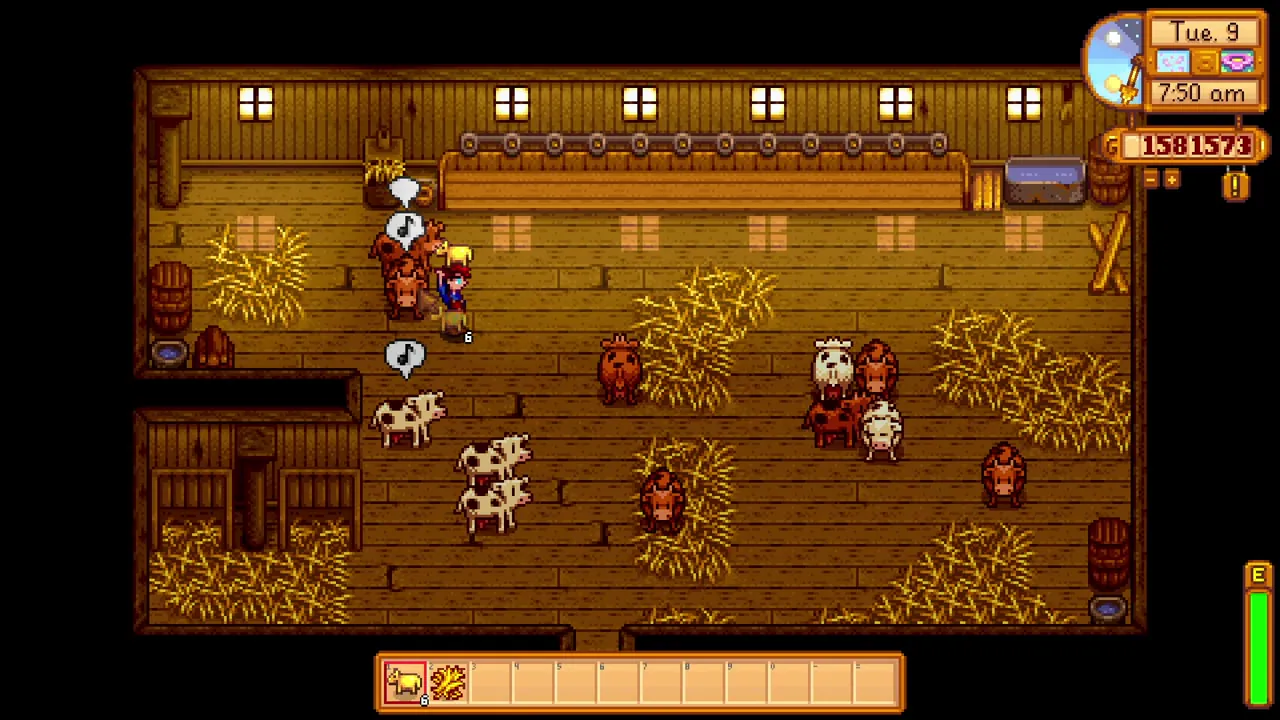
Late-game money can become extremely easy when the trees start producing thousand-gold syrup. After claiming Foraging Mastery, you can craft Mystic Tree Seeds by combining five acorns, five maple seeds, five pine cones, and five mahogany seeds. Grow the trees, place tappers on them, and each one produces Mystic Syrup worth one thousand gold every seven days.
The Tapper profession raises that to twelve hundred and fifty. Heavy Tappers shorten that production cycle. The syrup is labeled as an artisan good, but Artisan does not increase its price. Tapper does. Stardew Valley enjoys making simple words legally complicated. Surround Mushroom Logs with the same Mystic Trees and the setup becomes even better, because those trees push the logs toward valuable purple mushrooms.
No watering. No replanting. No animals. No seasons. Just a magical forest quietly producing income while looking far too innocent to understand finance.
20. Build a routine you can maintain
The easiest way to make money is not one crop, animal, or machine. It is making all of them require less work. Use sprinklers so crops do not consume your mornings. Use Junimo Huts for large outdoor harvests. Use Auto-Grabbers in barns and coops. Place machines beside the ingredients they process. Keep one machine outside a shed as a timer.
Use sheds to organize production. Put chests at the start and end of every workflow. Use coffee, a horse, minecarts, obelisks, and warp totems to stop donating hours to walking. Then choose a system you will actually maintain. Maybe that is a weekly Ancient Fruit harvest. Maybe it is Fairy Rose Honey. Maybe it is pigs, smoked fish, mushrooms, or an army of suspiciously productive chickens.
The most profitable method on paper is worthless if it makes you stop playing. Easy money is repeatable money. And once every repeated action on your farm becomes smaller, faster, or automatic, you do not need to chase gold anymore. The gold starts waiting for you.
An outside machine only tracks an indoor batch when it uses the same product and was loaded at the same time. Junimos do not harvest in rain or winter, or inside the greenhouse or on Ginger Island.
For a more detailed walkthrough, see my money-making guide.
Watch the full video

More Stardew Valley guides
- Top 15 Ways To Get Rich In Stardew Valley [Early Game]
- How To Farm Every Resource in Stardew Valley: 18 Powerful Methods Made Easy
Mechanics references: Fish Smoker, Tea Sapling, Mushroom Log, Dehydrator, Golden Animal Cracker, Mystic Tree.